Kolsiya Tie & Dye Cluster
The Kolsiya Tie & Dye Cluster is a community-based artisan development initiative of Kamalnishtha Sansthan, established to preserve, promote, and strengthen the traditional art of tie and dye (Bandhani) practiced by rural artisans of Kolsiya and surrounding villages in Jhunjhunu district, Rajasthan. Rooted in generations of cultural knowledge and manual expertise, this craft represents both livelihood and identity for artisan families.
Tie and dye is not merely a textile technique but a living cultural expression shaped by regional traditions, environmental conditions, and social history. Over time, however, changing market dynamics, reduced access to design innovation, and dependence on informal trade networks have placed traditional artisans under increasing economic pressure. The Kolsiya Tie & Dye Cluster was conceptualized as a structured response to these realities.
Background and Rationale
Across rural Rajasthan, a large number of artisan households depend on handcrafted textile work as their primary source of income. Despite possessing refined skills, many artisans remain trapped within low-income production cycles due to weak branding, limited market exposure, and inadequate institutional support. This disconnect between craftsmanship and market access has led to income instability and declining interest among younger generations.
Drawing from Kamalnishtha Sansthan’s long-standing engagement in community development, skill training, and livelihood promotion, the Kolsiya Tie & Dye Cluster was designed to create a sustainable ecosystem where traditional knowledge is strengthened through modern production, design, and marketing support.
Purpose and Core Objectives
The cluster aims to revive and preserve traditional tie and dye techniques while enhancing artisan skills through structured training and design orientation. By encouraging collective production, quality standardization, and innovation, the initiative seeks to improve income security and employment opportunities for rural artisans.
A key objective is to promote women’s participation and leadership within artisan enterprises. Women artisans play a critical role in the tie and dye process, and the cluster framework supports their economic independence by enabling home-based production, skill upgradation, and financial awareness.
Community-Centric Development Model
The Kolsiya Tie & Dye Cluster follows a participatory development approach in which artisans are active stakeholders rather than passive beneficiaries. Local artisans are involved in planning, training design, product development, and evaluation processes. This ensures that interventions remain culturally authentic, relevant, and rooted in community priorities.
Through collective decision-making and shared ownership, the cluster strengthens community bonds while fostering accountability and long-term sustainability. Artisans are supported not only as producers but as custodians of cultural heritage.
Alignment with Kamalnishtha Sansthan’s Vision
The Kolsiya Tie & Dye Cluster reflects Kamalnishtha Sansthan’s broader mission of inclusive development, cultural preservation, and skill-based empowerment. The initiative embodies the belief that sustainable rural livelihoods can be built when traditional knowledge systems are supported by ethical institutions, community participation, and market-driven opportunities.
Beneficiary Profile
The Kolsiya Tie & Dye Cluster is structured to support traditional artisans and craft-based households who rely on tie and dye work as a primary or supplementary source of livelihood. These artisans represent generations of inherited knowledge, manual skill, and cultural expression rooted in Rajasthan’s textile traditions. Kamalnishtha Sansthan works to strengthen their economic stability, social recognition, and long-term sustainability through a cluster-based development approach.
Most beneficiaries belong to rural and semi-rural communities where access to formal skill training, market exposure, and institutional support has historically remained limited. The cluster initiative is designed to bridge this gap by integrating artisans into structured production systems, collective market access, and continuous capacity-building programmes.
Target Beneficiary Groups
The primary beneficiaries include traditional tie and dye artisans who possess practical knowledge but lack organized market connectivity. Women artisans form a significant segment, many of whom are engaged in home-based textile processes such as knotting, dye preparation, washing, and finishing. Youth from artisan families are also included, particularly those seeking skill-based livelihood opportunities that allow them to remain connected to their cultural heritage while earning a stable income.
In addition, the cluster supports small-scale craft producers and informal workers who depend on seasonal or irregular craft income. By bringing these groups under a collective framework, the initiative reduces vulnerability and promotes economic resilience.
Eligibility & Participation Framework
Artisans associated with the Kolsiya Tie & Dye Cluster are typically residents of Kolsiya village or nearby rural areas and are actively engaged in tie and dye or related textile activities. Many belong to economically vulnerable households and rely on craft work as a key livelihood source. Participation is based on willingness to engage in training programmes, collective production models, and gradual adoption of improved techniques, designs, and quality standards.
Focus on Women Artisans
Women artisans play a central role within the Kolsiya Tie & Dye Cluster. Their contribution extends across multiple stages of textile production while managing household responsibilities. Kamalnishtha Sansthan places special emphasis on strengthening women’s technical capabilities, design understanding, and confidence through skill enhancement programmes and leadership-oriented engagement.
The cluster promotes home-based production models that allow women to generate income without disrupting family structures. Over time, this approach supports financial independence, informed decision-making, and greater social recognition for women artisans within their communities.
Scale and Community Reach
The Kolsiya Tie & Dye Cluster is designed to create both direct and indirect impact. While core activities focus on an identified group of artisans, the benefits extend to families and the wider community through improved income security, employment generation, and intergenerational skill transfer. As production capacity and market linkages expand, additional artisans are gradually integrated into the cluster framework.
Social and Economic Impact
By positioning artisans as active participants rather than passive recipients, the initiative strengthens household incomes, preserves traditional craft knowledge, and reduces distress-driven migration. The collective model reinforces community networks, shared identity, and dignity of labor. Through sustained institutional support, the Kolsiya Tie & Dye Cluster contributes to inclusive rural development while ensuring that traditional craftsmanship remains economically viable in modern markets.
Kolsiya Tie & Dye Cluster
The Kolsiya Tie & Dye Cluster is a community-based artisan development initiative facilitated by Kamalnishtha Sansthan with the objective of preserving traditional textile craftsmanship while creating sustainable livelihood opportunities for rural families. Located in Rajasthan, the cluster represents generations of artisans skilled in Bandhani and tie & dye techniques that have been passed down through practice, cultural memory, and lived experience.
Kamalnishtha Sansthan actively supports artisans through skill upgradation programmes, design orientation workshops, quality improvement initiatives, and exposure to evolving market trends. This approach ensures that traditional knowledge is preserved while artisans remain adaptable, competitive, and economically secure.
To strengthen ethical market access, Kamalnishtha Sansthan has facilitated the development of KTDC, a dedicated digital platform designed to promote authentic handcrafted products from the Kolsiya Tie & Dye Cluster. KTDC functions as a transparent marketplace that directly connects artisans with conscious consumers while ensuring fair pricing and sustainable trade practices.
The products emerging from the cluster include hand-dyed dupattas, sarees, stoles, scarves, and home furnishing textiles. Each product undergoes a meticulous process involving fabric preparation, manual knotting, dyeing with natural or low-impact colors, and careful finishing, resulting in unique pieces that reflect the artisan’s identity and craftsmanship.
Together, Kamalnishtha Sansthan and KTDC demonstrate a holistic development model where cultural preservation, livelihood generation, and ethical commerce coexist. The Kolsiya Tie & Dye Cluster stands as a living example of how traditional crafts can thrive in modern markets when supported by inclusive institutions and community-driven values.
Kolsiya Tie & Dye Products – Available on KTDC
Explore authentic, handcrafted tie & dye products created by artisans of the Kolsiya Cluster under Kamalnishtha Sansthan. Each product reflects traditional Bandhani techniques, cultural heritage, and sustainable craftsmanship. Purchase directly through our official e-commerce platform KTDC.
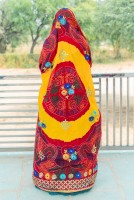
राजस्थानी ओढ़नी (rajasthani Odhani)
विशेष रूप से शेखावाटी ओढ़नी की सुंदरता को दर्शाते हैं। ये ओढ़नियाँ अपनी जीवंतता, जटिल कारीगरी और पारंपरिक कला के लिए जानी जाती हैं।
Starting from ₹3325
Buy on KTDC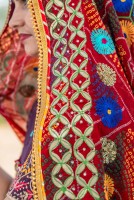
Purvaja Women's Jacquard Semi-stitched Lehenga Choli
Purvaja Women's Jacquard Semi-stitched Lehenga Choli
Starting from ₹3,499
Buy on KTDC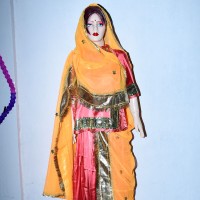
Avilhara Rajasthani Marwari Chunri Odhana Bandhej Bandhani Plated Brooch Stole Dupatta
Avilhara Rajasthani Marwari Chunri Odhana Bandhej Bandhani Plated Brooch Stole Dupatta
Starting from ₹855
Buy on KTDC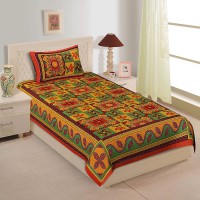
Rajasthani Jaipuri Traditional Single Bed Sheet With One Pillow Cover
Unibliss Branded Single Bedsheet Made Of Fine Quality Premium 100% Cotton Fabric. Traditional Rajasthani Hand Block Printed Bedsheet With Skin Friendly Dyes Is Perfect Choice To Give Your Room A Complete Makeover. .
Starting from ₹390
Buy on KTDC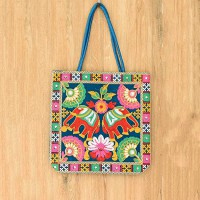
Vintage Gulley Traditional Embroidered Rajasthani Hand Bag
Handcrafted Bag Made By Keeping In Mind The Latest Fashion Of Women. It Is Very Easy To Carry With Ampler Of Space And Will Definitely Boost Your Look And Personality With Its Great Art Work Of Rajasthan.
Starting from ₹175
Buy on KTDC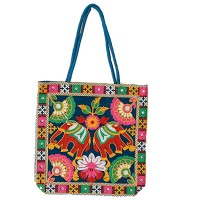
Vintage Gulley Traditional Embroidered Rajasthani Hand Bag
Handcrafted Bag Made By Keeping In Mind The Latest Fashion Of Women. It Is Very Easy To Carry With Ampler Of Space And Will Definitely Boost Your Look And Personality With Its Great Art Work Of Rajasthan.
Starting from ₹175
Buy on KTDCProduction & Development Process
Community Mobilisation and Artisan Identification
The Kolsiya Tie & Dye Cluster begins its process at the community level, where Kamalnishtha Sansthan works directly with rural artisan families to identify traditional practitioners of Bandhani and tie & dye crafts. Many artisans possess generational knowledge but lack formal recognition, stable income channels, and organized support systems. Through field engagement, trust-building interactions, and participatory meetings, artisans are mobilised into a collective structure that encourages collaboration, shared learning, and mutual growth.
Skill Enhancement and Design Development
Once artisans are organised, Kamalnishtha Sansthan facilitates structured skill development interventions. These include refining traditional dyeing techniques, improving fabric handling, introducing contemporary colour palettes, and aligning designs with evolving market preferences while preserving cultural authenticity. Design development workshops are conducted to bridge traditional aesthetics with modern usability, enabling artisans to expand beyond subsistence production and create market-ready textile collections.
Raw Material Selection and Preparation
The production process emphasizes quality and sustainability from the very beginning. Artisans are supported in sourcing suitable fabrics and dyes that meet durability, comfort, and environmental considerations. Fabric preparation involves washing, drying, and surface readiness to ensure uniform dye absorption. Knotting and tying techniques are applied manually, demanding precision, patience, and deep craft knowledge that define the uniqueness of each product.
Traditional Dyeing and Craft Execution
Dyeing remains the heart of the Kolsiya Tie & Dye process. Artisans use time-tested methods involving controlled dye baths, layered colour application, and repeated washing cycles to achieve desired patterns and shades. Each piece is handcrafted, ensuring that no two products are identical. This labour-intensive stage reflects not only technical skill but also artistic expression rooted in regional culture and identity.
Finishing, Quality Control, and Standardisation
After dyeing, products undergo careful finishing processes including untying, washing, drying, ironing, and trimming. Kamalnishtha Sansthan supports artisans in adopting quality control measures that enhance product consistency without compromising handmade character. This stage ensures colour fastness, fabric durability, and visual appeal, making the products suitable for wider market acceptance.
Market Linkage through KTDC
Completed products are connected to markets through KTDC, the dedicated digital platform supported by Kamalnishtha Sansthan. KTDC enables transparent pricing, ethical trade practices, and direct consumer access. By eliminating exploitative intermediaries, the platform ensures fair compensation for artisans while allowing customers to purchase authentic handcrafted textiles with confidence and clarity.
Reinvestment and Cluster Sustainability
Revenue generated through product sales is reinvested into the cluster for artisan welfare, further skill development, infrastructure support, and future capacity-building initiatives. This circular development model strengthens economic resilience, promotes long-term sustainability, and reinforces Kamalnishtha Sansthan’s commitment to inclusive growth and cultural preservation.
Schemes & Support Programmes
Artisan Livelihood Strengthening Scheme
This scheme focuses on enhancing income security for traditional tie and dye artisans by creating structured livelihood opportunities within the Kolsiya cluster. Kamalnishtha Sansthan supports artisans through continuous production cycles, market integration, and fair pricing mechanisms. The scheme ensures artisans are able to generate stable earnings while maintaining their cultural identity and craftsmanship. By reducing dependency on seasonal labor and exploitative intermediaries, this initiative promotes dignity, economic resilience, and long-term self-reliance among artisan families.
Traditional Craft Skill Upgradation Programme
Under this programme, artisans receive hands-on training to refine existing dyeing techniques while adapting to contemporary design trends. The focus remains on preserving traditional Bandhani methods while improving color consistency, fabric durability, and product finish. Kamalnishtha Sansthan conducts regular workshops led by master artisans and design professionals, enabling participants to enhance their technical proficiency and remain competitive in evolving textile markets.
Women Artisan Empowerment Scheme
This scheme is designed to strengthen the participation of women artisans within the Kolsiya Tie & Dye Cluster. Women are supported through skill training, home-based production models, leadership development, and income-generation opportunities that align with household responsibilities. The initiative promotes financial independence, decision-making confidence, and social recognition for women artisans, contributing to gender equity within rural craft ecosystems.
Design Innovation and Product Development Support
To expand product diversity and market appeal, this scheme encourages innovation in design while respecting traditional aesthetics. Artisans are guided in developing new product categories, contemporary color palettes, and functional textile applications. Kamalnishtha Sansthan facilitates collaborative design processes that connect artisan creativity with consumer demand, ensuring products remain culturally rooted yet commercially viable.
Market Access and Digital Commerce Integration Scheme
This scheme enables artisans to access wider markets through KTDC, the ethical digital commerce platform supported by Kamalnishtha Sansthan. The initiative ensures transparent pricing, ethical trade practices, and direct consumer engagement. By leveraging digital tools, artisans gain visibility beyond local markets, resulting in improved sales potential and long-term income sustainability.
Raw Material and Input Support Scheme
Artisans often face challenges in sourcing quality raw materials at affordable rates. This scheme assists artisans by facilitating access to suitable fabrics, dyes, and production inputs through collective procurement mechanisms. By reducing production costs and ensuring quality consistency, the scheme strengthens artisan productivity and overall cluster efficiency.
Quality Assurance and Standardisation Programme
This programme focuses on improving product reliability without compromising handcrafted authenticity. Artisans are trained in quality control practices related to dye fastness, fabric strength, and finishing standards. Kamalnishtha Sansthan supports artisans in meeting market expectations while preserving the individuality that defines handmade products.
Income Stabilisation and Price Assurance Scheme
Through this scheme, Kamalnishtha Sansthan ensures artisans receive fair and predictable compensation for their work. Structured pricing models are developed based on labor input, material costs, and market demand. This approach protects artisans from price volatility and reinforces trust within the cluster-based production system.
Youth Engagement and Artisan Succession Programme
This scheme encourages younger generations to engage with traditional crafts by offering skill training, exposure visits, and entrepreneurship guidance. By integrating modern tools with traditional knowledge, the programme ensures craft continuity while creating meaningful livelihood pathways for rural youth within the textile sector.
Cluster Sustainability and Welfare Support Scheme
Revenue generated through cluster activities is partially reinvested into welfare and sustainability initiatives such as health awareness, social security linkage, and future capacity-building programmes. This scheme reinforces Kamalnishtha Sansthan’s holistic development approach, ensuring artisans benefit not only economically but also socially and institutionally.